The hidden cost of Excel in construction

In almost any construction business, somewhere behind the estimates, project programmes, labour schedules and material orders, you’ll probably find an Excel spreadsheet holding everything together.
Without a doubt, Excel is one of the most successful business tools ever created. It’s familiar, flexible, inexpensive and, in the hands of someone who really understands it, remarkably powerful. That’s why so many contractors and construction firms rely on spreadsheets to run critical parts of their operations. Enquiries, estimates, tenders, project costs, subcontractor records, plant schedules, applications for payment and customer information are often held together by a network of spreadsheets that has grown gradually over the years.
There are some businesses where a single workbook had been passed between estimators, project managers, site teams and the finance department for years, with nobody completely understanding every formula or dependency inside it.
In many cases, this isn’t because the business is behind the times; it’s because Excel solved a real problem at the exact moment the business needed it solving. A new spreadsheet or formula was quicker than buying a system, easier than changing processes and more adaptable than an off-the-shelf platform that didn’t quite fit.
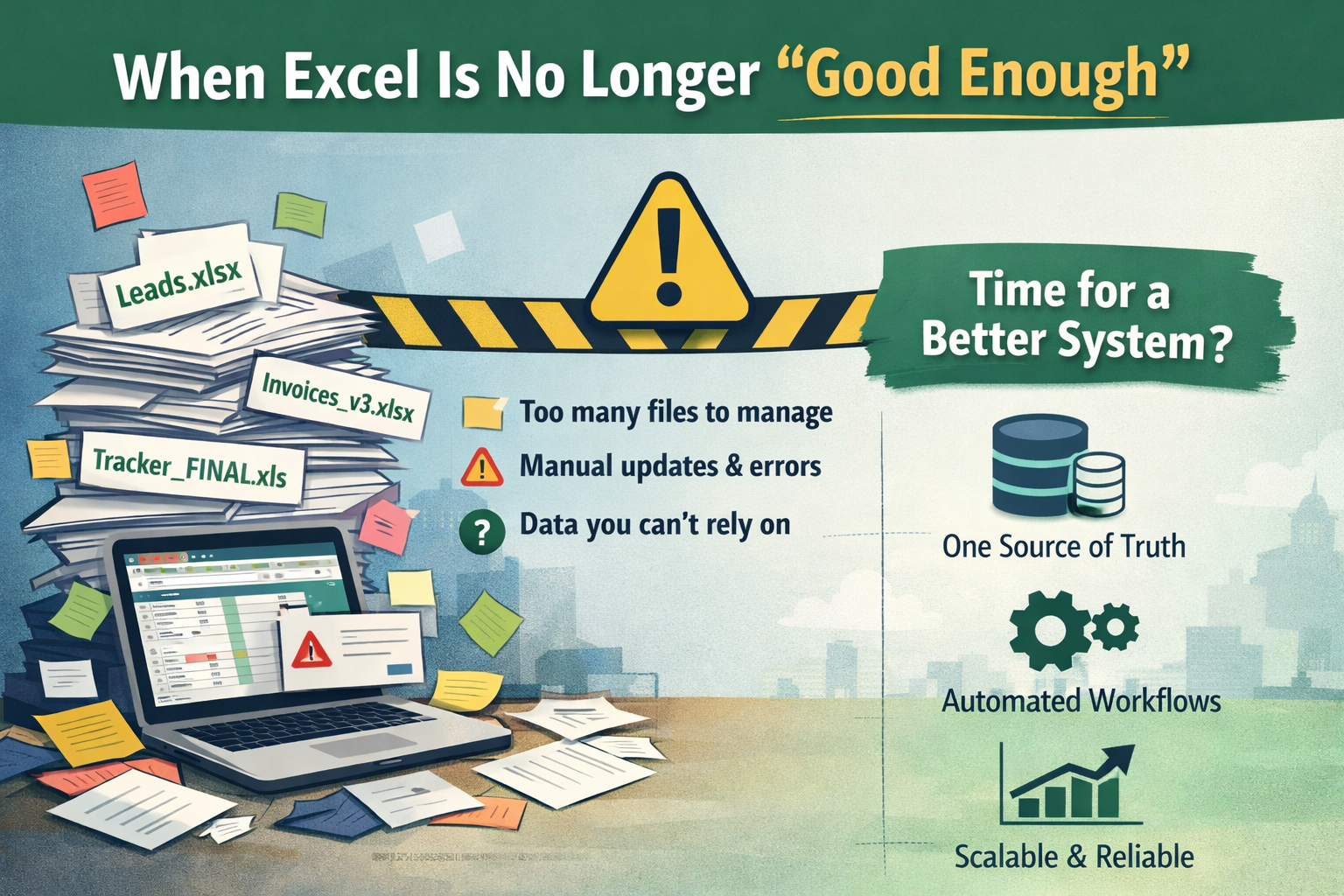
The problem is that what starts as a useful workaround can quietly and quickly become part of the operational infrastructure. Before long, the spreadsheet is no longer just supporting the business; the business is actually dependent on it. And this is where the hidden costs begin.
Manual errors
The most obvious risk of this spreadsheet reliance is manual error. A mistyped number, an accidental overwrite, a broken formula or a copied row pasted into the wrong place can have real consequences. In construction, those consequences can affect tender pricing, material quantities, labour allocation, subcontractor payments, project margins, programme dates or customer communication, to name but a few.
The bigger issue is often not just one mistake, but the lack of confidence in the data that follows. If two people are working from different versions of the same cost plan, which one is correct? If a variation has been agreed on site but not reflected in the paperwork, who spots the discrepancy? If labour, plant or material figures are maintained manually, how does the project team know whether the numbers are current?
Multiple versions of the ‘truth’
Version control is one of the biggest hidden risks in spreadsheet-led businesses. A file might be emailed to a colleague, saved locally, renamed, amended and sent back. Someone else might then update an older version that hasn’t been deleted. Another person keeps their own tracker because they don’t fully trust the shared one. The result is multiple versions of the ‘truth’.
Construction projects depend on accurate, timely information, but many businesses are making important commercial and operational decisions using data that is fragmented, duplicated, out of date or simply not right.
Data silos
This all leads to the next hidden cost: data silos. Estimators may have one view of the project; site teams may have another; quantity surveyors may be working from separate cost and variation data; finance may be relying on different invoice and payment records; procurement may have its own supplier and materials trackers. Each team is doing its best, but the business as a whole lacks one reliable version of the truth.
This is particularly challenging in construction because so many processes are connected. A change to the scope can affect the estimate, which can affect material requirements and subcontractor packages, which can affect the programme, which can affect valuations, payment applications, completion dates and ultimately cash flow.
When these connections are managed manually, the business becomes dependent on people remembering to update, check, chase and communicate. The system works because certain people know how to make it work, but if they are off sick, leave the business or become too busy, the cracks start to appear.
Clearer, faster access to data
The lack of real-time visibility is another significant cost. Leaders often don’t need any more data. What they actually need is clearer, faster access to the right data. They need to know which opportunities are likely to convert, whether projects are on schedule, where margins are slipping, what labour is available, which invoices or applications are outstanding and where resources are being stretched.
If that information takes hours or days to compile, it’s no longer truly operational; it’s historical. By the time reports are produced, the position may already have changed.
And this is exactly why reliance on spreadsheet shouldn’t simply be dismissed as bad practice, but instead treated as a sign that a business may have outgrown its existing processes.
What’s the alternative?
When a construction firm relies heavily on Excel, it usually means the business has operational needs that its existing systems are not meeting. But what’s the alternative? Some software can prove too rigid, too focused on one stage of the project lifecycle or too complicated for site teams to use consistently. At the same time, off-the-shelf systems can force businesses to change the way they work completely, rather than supporting existing processes that have already proven to deliver value.
That’s why so many firms resist moving away from spreadsheets. They aren’t resistant to improvement; they simply can’t see a way forward that doesn’t mean compromising on flexibility or burdening teams with more admin.
This is an important distinction. People don’t hold on to Excel because they enjoy duplication or manual admin. They hold on to it because it lets them shape a process around the reality of their business. In construction, that reality can vary enormously according to project type, contract, supply chain, client requirements and the way work is delivered on site.
The answer isn’t always to replace Excel with a sprawling, generic system that dictates how the business should operate. This approach can often create a different problem: structure without usability. If a system is too cumbersome for estimators, project managers, quantity surveyors or site teams, people will simply create new spreadsheets and workarounds outside it and the business will be back to square one.
What does the business actually need?
The better approach is to understand what the spreadsheets are really doing. Which processes do they support? Where are the manual steps? What information is being duplicated? Which reports are being created? Where do errors or delays occur? Which parts of the spreadsheet give teams flexibility that must not be lost?
Once all this is understood, it’s possible to design digital workflows that preserve flexibility while adding control.
A well-designed bespoke workflow should feel familiar enough for people to adopt but structured enough to reduce risk. It might connect enquiries, estimating, tendering, project set-up, procurement, labour and plant allocation, subcontractor management, variations, valuations, invoicing and reporting, at the same time as providing access controls, audit trails, automated reminders and real-time dashboards. Importantly, it should integrate with existing tools such as accounting software, document management, email and site reporting platforms where those tools already work well.
Software as an enabler of growth
Crucially, it should grow with the business. Construction firms don’t stand still. New clients, larger contracts, additional service lines, changing compliance requirements and more complex reporting needs all emerge over time. Any digital system must be scalable and adaptable, not another constraint that the business eventually outgrows.
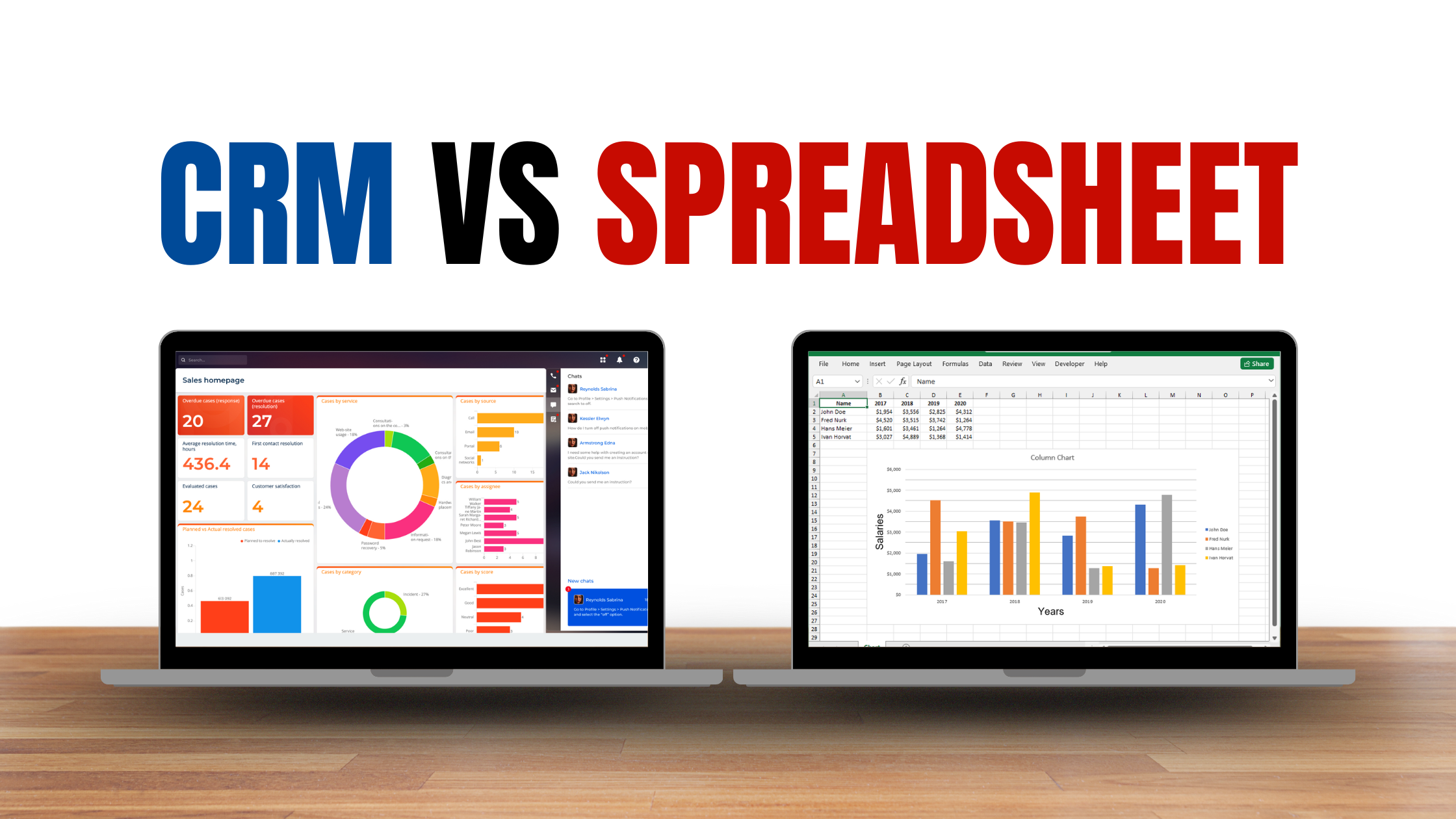
This is where the conversation should move beyond “Excel versus software”. Excel isn’t the enemy. In many businesses, it has been the innovation layer that allowed teams to keep projects moving when no suitable system existed.
The real question is whether the business has reached the point where the risks of relying on spreadsheets now outweigh the benefits. For many construction firms, that tipping point comes when reporting takes too long, when project and commercial teams no longer trust the same figures, when variations or costs are missed, when files become slow or unstable, when customer service is affected, when key knowledge sits with one or two people, or when growth exposes weaknesses that were previously manageable.
At that stage, moving away from Excel isn’t about modernising for the sake of it. It’s about protecting margins, reducing avoidable risk and giving office and site teams the tools to work with greater confidence.
The most effective digital systems don’t erase the knowledge embedded in spreadsheets. Instead, they capture it, strengthen it and turn it into a more reliable foundation for growth. Excel has undoubtedly earned its place in construction businesses, but when it becomes the place where too much critical operational and commercial knowledge lives, it creates a hidden cost that is all too easy to ignore until something goes wrong.
Related Blogs
Bespoke System vs Excel Choosing the Right Tool for the Job
If you’ve been in business for a while, you’ve …