Bespoke System vs Excel Choosing the Right Tool for the Job
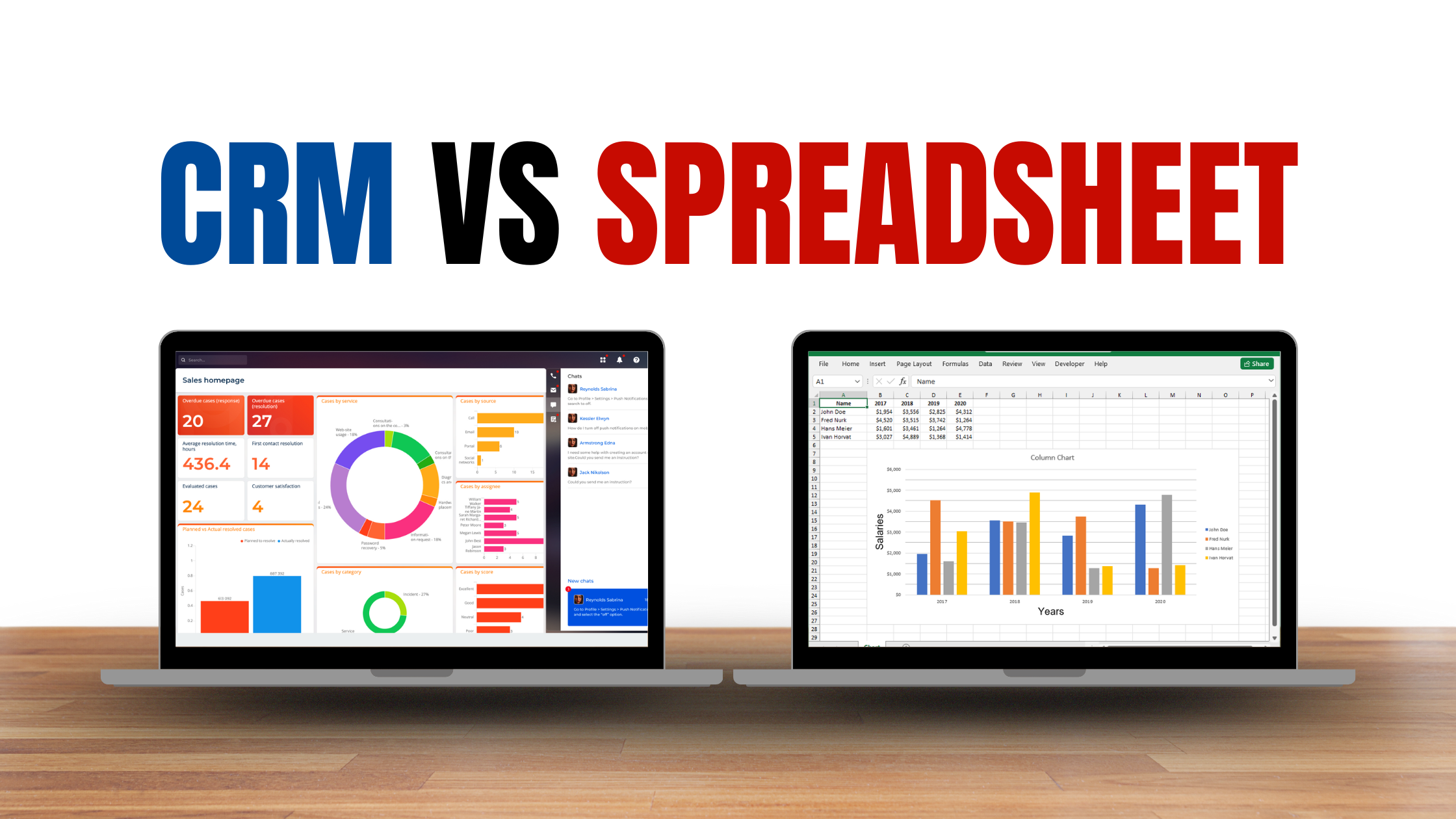
If you’ve been in business for a while, you’ve probably leaned on Excel more times than you can count. Most of us have.
It’s quick, it’s familiar, and it gets the job done… until one day, it doesn’t.
A business owner recently told me:
“Our whole operation lives in spreadsheets. One wrong formula and the week collapses.”
It was said with a laugh, but the worry behind it was real — and very common.
Here’s the honest breakdown of when Excel shines, when it struggles, and why so many teams eventually move to a customsed software.
🟦 Excel: Brilliant but Built for Simplicity
Excel does a lot of things right:
✔ Quick to start
✔ Easy for lists & maths
✔ Great for experimenting
✔ Perfect for small teams
But as your business gets busier, something changes.
The spreadsheet becomes heavier… slower… and much more fragile than you’d ever expect.
⚠️ The Moment Excel Starts Becoming a Problem
❌ Multiple versions: final_v4_updated(2).xlsx
❌ Overwritten formulas that no one notices
❌ Hidden rows, lost data
❌ No audit trail
❌ No automatic follow-ups
❌ Everything depends on manual entry
Excel isn’t doing anything wrong — it simply wasn’t built for:
-
managing relationships
-
tracking interactions
-
coordinating teams
-
managing sales pipelines
-
automating workflows
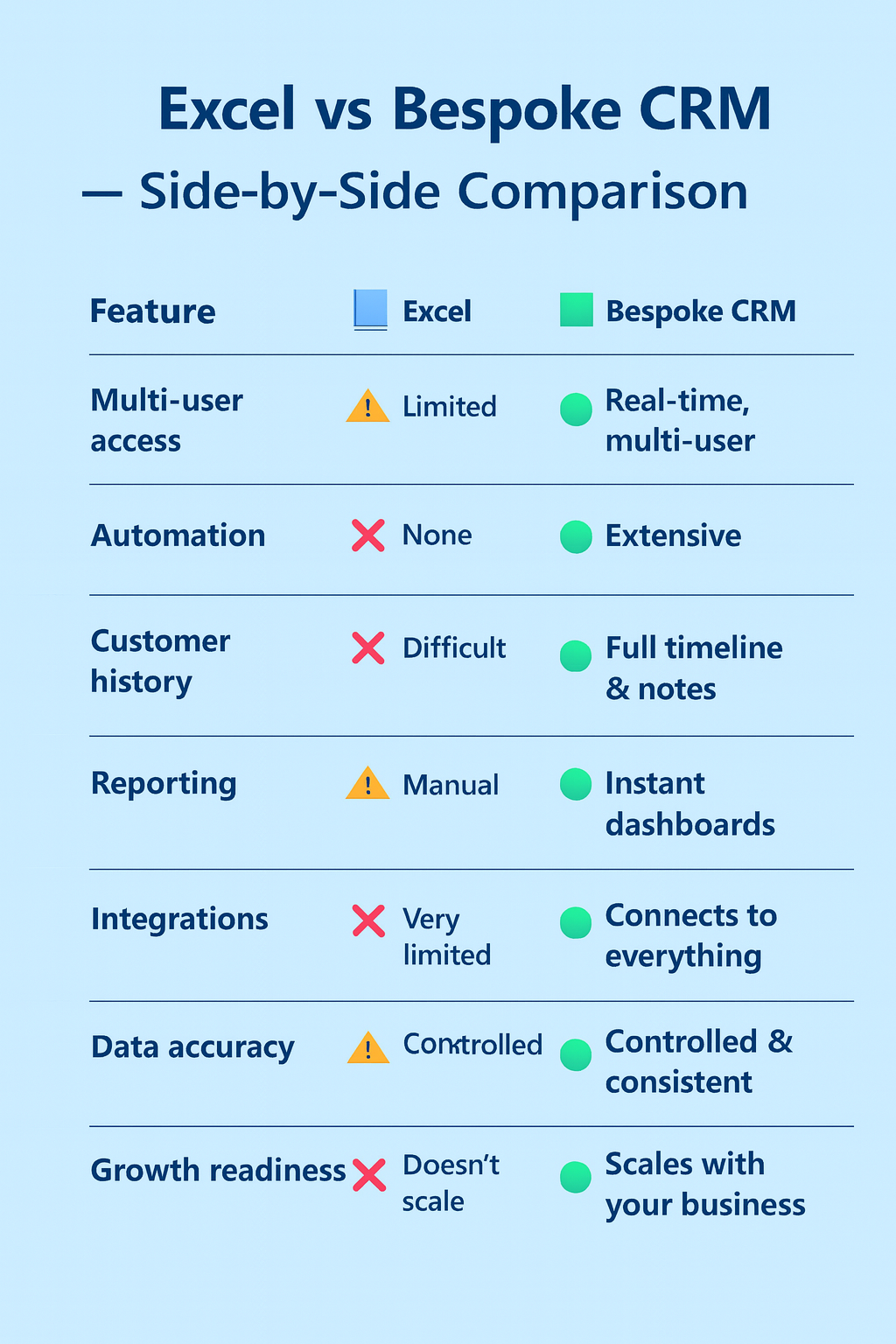
Once your team grows or processes become more complex, Excel becomes more of a patch than a solution.
🟩 So What Makes a Bespoke Software Different?
A bespoke software is your business, structured properly.
Not a template. Not a pre-set system.
A tool that mirrors how you work — from enquiry → task → sale → delivery → repeat.
🛠 Built Around Your Workflow
Unlike off-the-shelf software, bespoke systems:
-
fit your terminology
-
match your process
-
follow your handovers
-
include only the features you need
You don’t adjust to it — it adjusts to you.
🔄 Automation That Replaces Manual Work
A software can do things Excel simply cannot:
🔔 reminders & follow-ups
📩 automatic emails
🔗 integrations (accounts, website, phones, calendars)
📌 task allocation
📈 instant reporting
It’s like giving every department an extra pair of hands.
👀 Live Visibility Across the Business
Everyone sees the same up-to-date information:
-
Sales → pipeline & enquiries
-
Admin → tasks & schedules
-
Management → performance & KPIs
-
Finance → invoicing & payments
One version. One truth. No confusion.
📌 A Real Story (Because This Isn’t Just Theory)
One of our clients — a service-based company — ran their entire sales process on spreadsheets.
Every week, different “versions” would circulate among the team. Leads were lost. Follow-ups forgotten. Reporting took hours.
Their sales manager finally said:
“We spend more time updating spreadsheets than talking to customers.”
We built them a software that:
-
tracked leads automatically
-
sent reminders
-
logged every call
-
centralised notes
-
connected to their accounts system
-
produced instant reports
Result:
Within weeks, the chaos disappeared.
Within months, conversions improved — without hiring anyone new.
They didn’t become better overnight.
Their system did.
⏳ How to Know It’s Time to Move On from Excel
You’re ready for a system if:
-
You’re copying the same data into multiple sheets
-
More than one person updates the file regularly
-
People forget follow-ups
-
Your reports take too long to prepare
-
You rely on one “Excel expert”
-
You feel anxious about breaking a formula
-
You can’t see everything in one place
If any of these ring true, you’re not just outgrowing Excel — Excel is holding you back.
🎯 Final Thought: Excel Isn’t Wrong — It’s Just Not Enough Anymore
Excel is a fantastic tool.
But it’s not built for managing customers, relationships, workflows, or growth.
A tailore-made system isn’t a replacement for Excel —
it’s the solution for everything Excel wasn’t designed to handle.
It gives you:
-
structure
-
automation
-
visibility
-
consistency
-
efficiency
-
accuracy
And most importantly — peace of mind.
FAQs
Q. We’ve managed everything in Excel for years — why change now?
Q. Is a bespoke CRM really worth it for a small business?
Q. How hard is it to move everything from Excel into a CRM?
Q. Will a CRM slow us down or complicate our work?
Q. How do we know if we’ve outgrown Excel?
Related Blogs

How Custom ERP is Revolutionising the Manufacturing Sector
⚙️ The Manufacturing Balancing Act If you’ve …


Streamlining Membership Operations with Custom Solutions
If you manage a membership organisation—whether that&…